Ask a roofing crew what’s different about ordering a dumpster for a tear-off versus a remodel, and the answer comes down to one word: density. A truckload of old cabinetry and drywall looks like a lot but weighs comparatively little. A truckload of old asphalt shingles looks almost identical from the curb and can weigh two or three times as much. Sizing a container for a roofing job means thinking about tonnage first and cubic yards second — the reverse of how most people approach a dumpster. Here’s how we walk Odessa homeowners and roofing crews through that math before a container ever leaves our lot on 46th St.
It’s worth having this conversation before the crew shows up rather than mid-tear-off, because a container that turns out undersized doesn’t just mean an inconvenient second delivery — it can mean a stalled job while everyone waits on a swap, or an overloaded container a hauling truck legally can’t take on the road. Getting the size right up front keeps a one-day tear-off a one-day job.
Start With Roof Squares, Then Check Layers
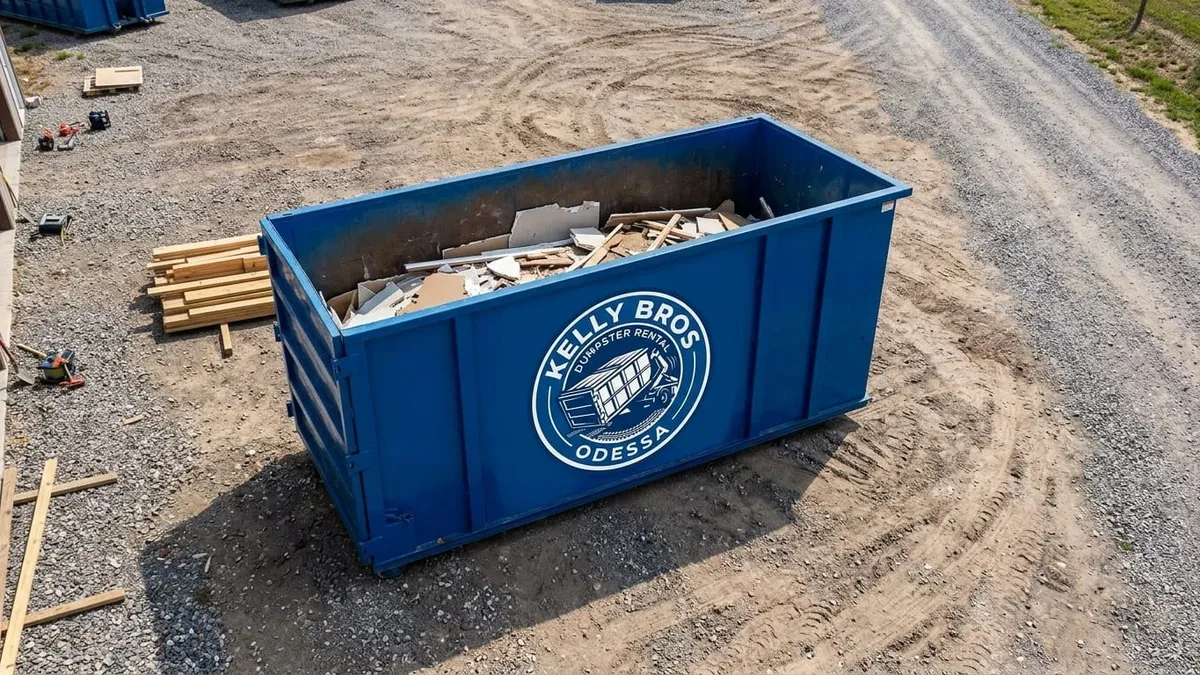
A “square” in roofing terms is 100 square feet of roof surface, and it’s the unit that actually matters for sizing — not the size of the house. A single-layer tear-off on a roof up to roughly 50 squares generally fits a 20-yard dumpster, which is the size we deliver most often for exactly this kind of job. Push past that — a bigger roof, a steeper pitch that sheds more waste material, or a second layer of shingles coming off underneath the first — and the math shifts toward a 30-yard dumpster instead, since a double tear-off can roughly double the weight without doubling the visible pile. If you don’t know your exact square count, a rough measurement of the roof footprint plus pitch is usually enough for us to steer you to the right size over the phone.
Why Weight Decides This Job, Not the Box Looking Full
This is the part that catches first-time renters off guard: a roofing dumpster can hit its weight allowance while the container still looks half-empty. Shingles, felt paper, and the nails and flashing that come off with them are dense material stacked in a relatively small footprint, so the visual fullness of the box tells you almost nothing about how close you are to the limit. That’s why we ask about square footage and layer count up front rather than just asking “how big is your roof” — a smaller roof with two layers of old shingles can out-weigh a larger single-layer tear-off. If your project also involves other heavy material — old decking, ridge tile, or ice-and-water shield — mention that too, since it stacks onto the same weight allowance. Our roofing dumpster rental page covers this in more detail alongside our general size guide, useful if part of your project is a roof and part is something lighter, like a gutted bathroom.
West Texas Hail and Wind Drive a Lot of Roofing Work
Roofing demand around Odessa isn’t spread evenly across the year — it tends to spike after the region’s hail and wind events, which are a real and recurring part of the Permian Basin climate. A documented hailstorm hit Odessa on June 12, 2015, and storms like it are exactly the kind of event that turns a roof from “fine” to “needs a full tear-off” almost overnight. West Texas is also genuinely one of the windiest parts of the country, with the region running windiest from roughly late February through mid-July and April standing out as the single windiest month, averaging around 12.1 mph. Sustained wind of that kind loosens and lifts shingles over time even without a dramatic single storm, which is part of why roofing calls around here don’t always trace back to one memorable date. If a storm just came through and you’re facing a full tear-off rather than a patch job, our severe weather scheduling guide covers how we handle the surge in demand that follows.
Coordinating Delivery With Your Roofing Crew
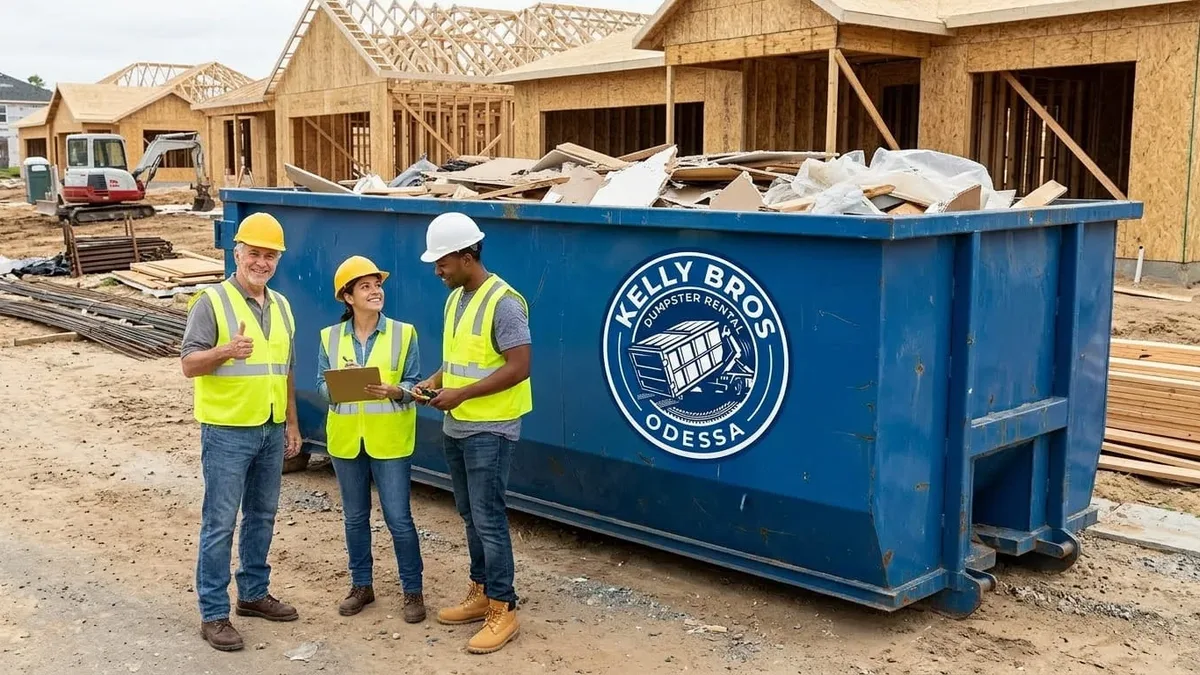
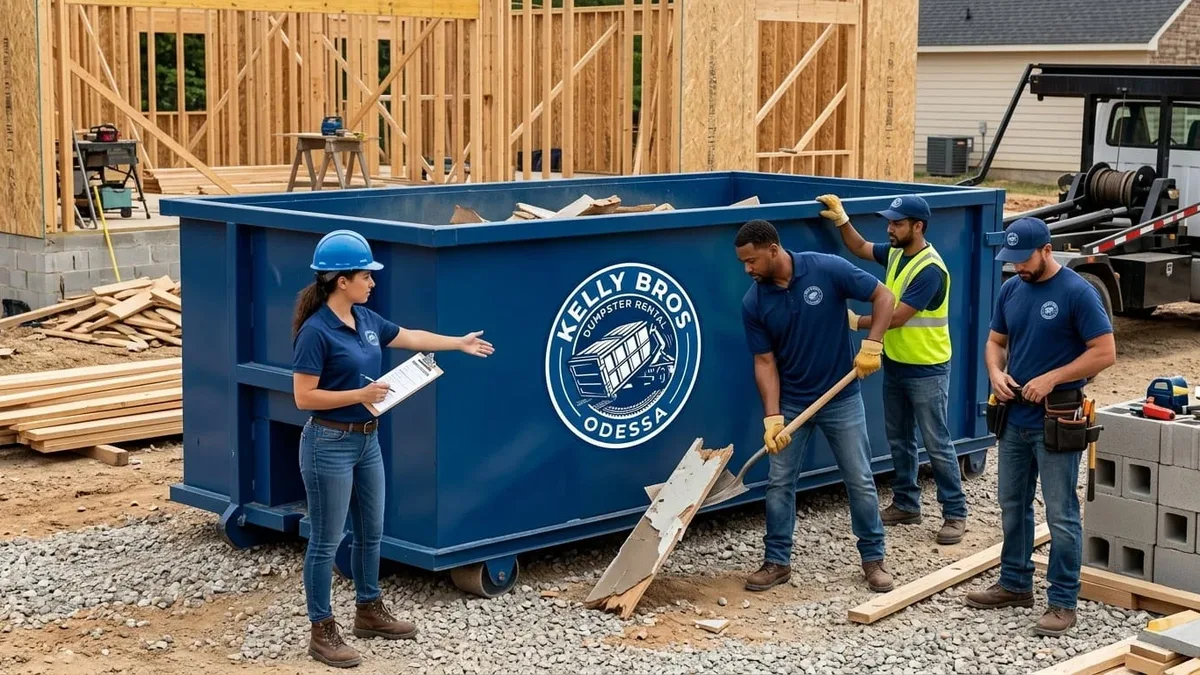
Timing matters more on a roofing job than on most other projects, since the container needs to be in place and ready before the first bundle of shingles comes off, and it needs to stay accessible for the whole tear-off rather than sitting somewhere the crew has to carry debris around to reach. We generally recommend delivery the afternoon or evening before the crew starts, so it’s positioned and out of the way of ladders, trucks, and staging material on day one. If your roofing contractor has a preferred spot for the container — close to the drop zone but clear of the work area — pass that along when you book and we’ll place it accordingly rather than guessing from the street.
Placement on Roofing Job Sites
Roofing debris comes off the house fast once a crew starts, which makes container placement worth thinking through before delivery day rather than during it. Most roofing dumpsters sit on the driveway directly below or near the work area, which needs no permit anywhere in our service area as long as the container stays entirely on private property. If the driveway is blocked by a work vehicle or there’s genuinely no room on the lot, street placement inside Odessa city limits or in unincorporated Ector County works a little differently, and each of the incorporated towns we serve — Midland, Andrews, Monahans, and the rest — runs its own process too. Our permit guide breaks that down by jurisdiction if you’re not sure which office applies to your address.
What Typically Comes Off With the Shingles
Along with the shingles themselves, a tear-off usually generates felt paper or synthetic underlayment, ridge caps, flashing, nails, and sometimes rotted decking that gets replaced along the way — all of it fair game for the roofing dumpster. What doesn’t belong is anything separately restricted from a roll-off under Texas rules, which occasionally comes up on older properties: old gutters or downspouts are fine, but a window A/C unit or any appliance with refrigerant pulled during the same project needs refrigerant recovered before disposal, and that’s a different path than the dumpster. If your roofing job is bundled with a bigger property cleanup, our disposal guide covers the full list of prohibited items so nothing holds up your pickup.
Multi-Layer Tear-Offs Deserve Extra Attention
Older homes around Odessa, especially properties that have gone through more than one reroof without a full tear-off, sometimes have two or even three layers of shingles stacked on top of each other. Each additional layer adds real weight without changing the footprint of the roof, which is exactly the scenario where a homeowner’s first size guess — based on square footage alone — comes in too small. If you know or suspect your roof has more than one layer, say so when you call. It’s a five-second detail that changes the recommendation more than almost anything else in the conversation, and it’s far easier to size correctly up front than to discover the extra weight once a crew is halfway through tear-off.
Booking the Right Size the First Time
The fastest way to avoid a mid-job upgrade is to call before the tear-off starts and give us three numbers: square footage of the roof, number of shingle layers coming off, and whether decking replacement is part of the scope. From there we’ll recommend a size and a flat rate up front, and if the job turns out bigger once the crew is into it, we’d rather swap you to a larger container than have you overload a smaller one past its weight allowance. Call Kelly Bros Dumpster Rental Odessa at (432) 237-3426 to talk through your roofing project, or browse the full lineup on our dumpster sizes page.