Construction and demolition work generates debris on a different scale than a household cleanout, and it’s worth planning for that difference before the first dumpster shows up rather than mid-project. Here’s what typically falls under construction debris, how to size a container for it, and the disposal rules that come up most often on Odessa and Permian Basin jobsites.
What Counts as Construction Debris
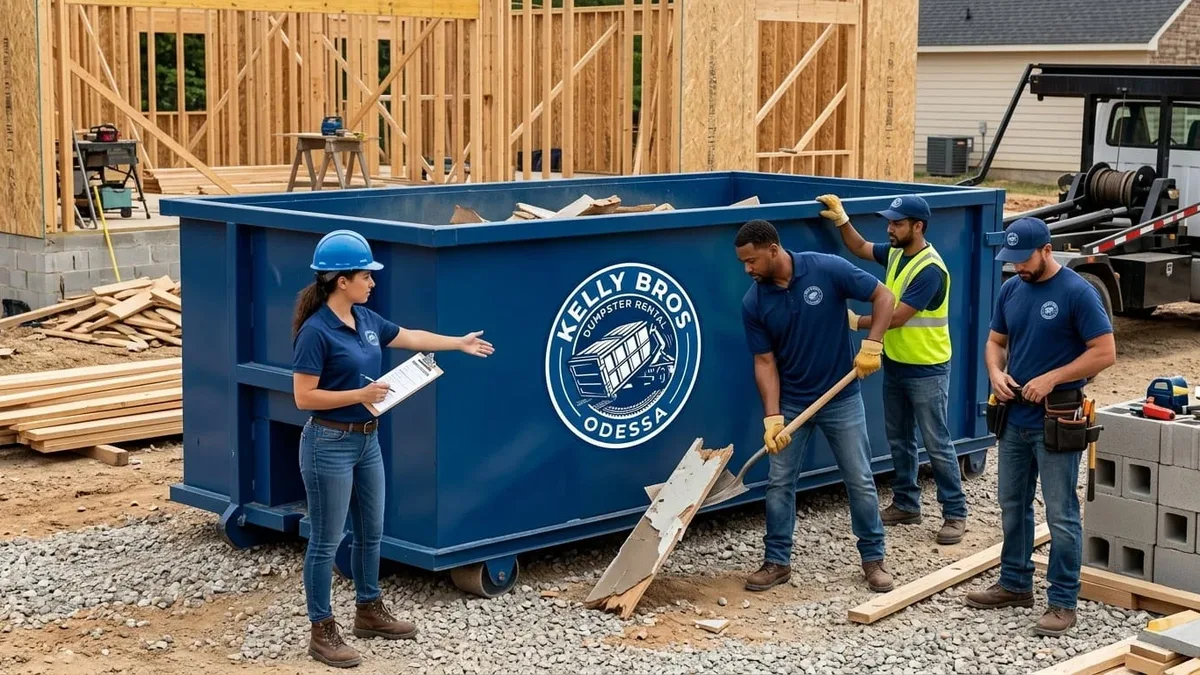
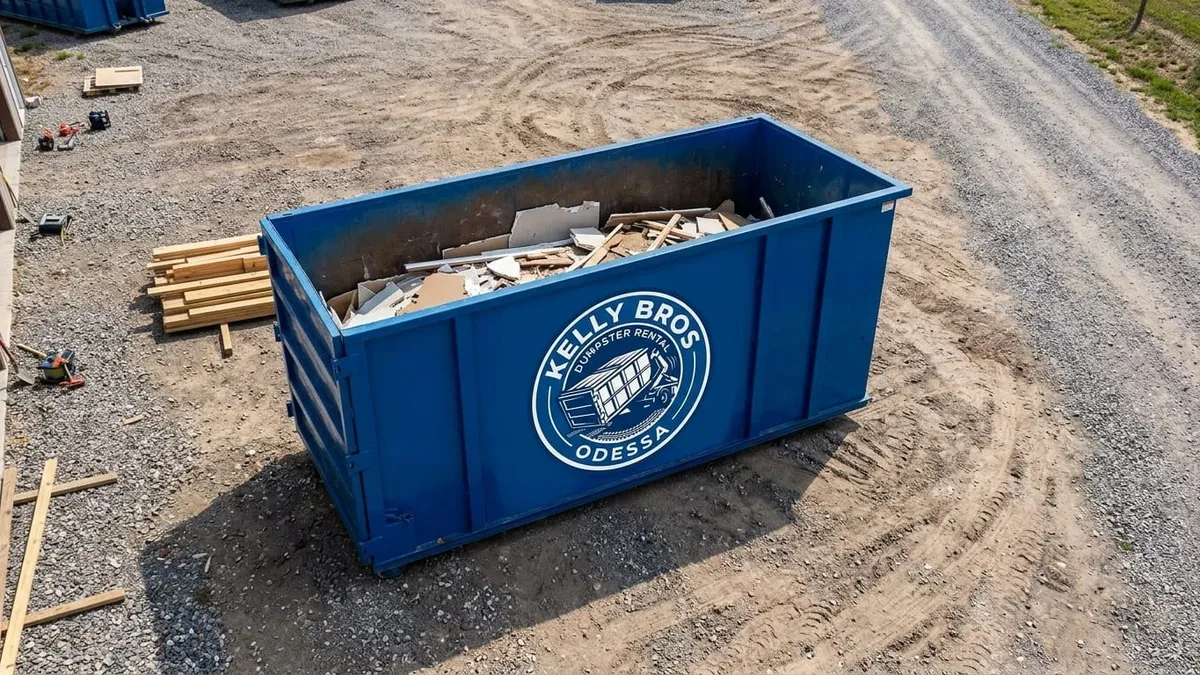
Framing lumber and offcuts, drywall, roofing materials torn off during a re-roof, flooring, cabinetry, insulation, concrete and brick from foundation or masonry work, packaging from materials and fixtures, and general demolition debris from a torn-down structure or gutted interior all fall under this category. It’s a broader and typically heavier mix than a residential cleanout, which is exactly why sizing and weight planning matter more on a jobsite than they do for, say, a garage purge. Our construction dumpster rental and demolition debris pages cover how we set these jobs up specifically.
Sizing for a Jobsite
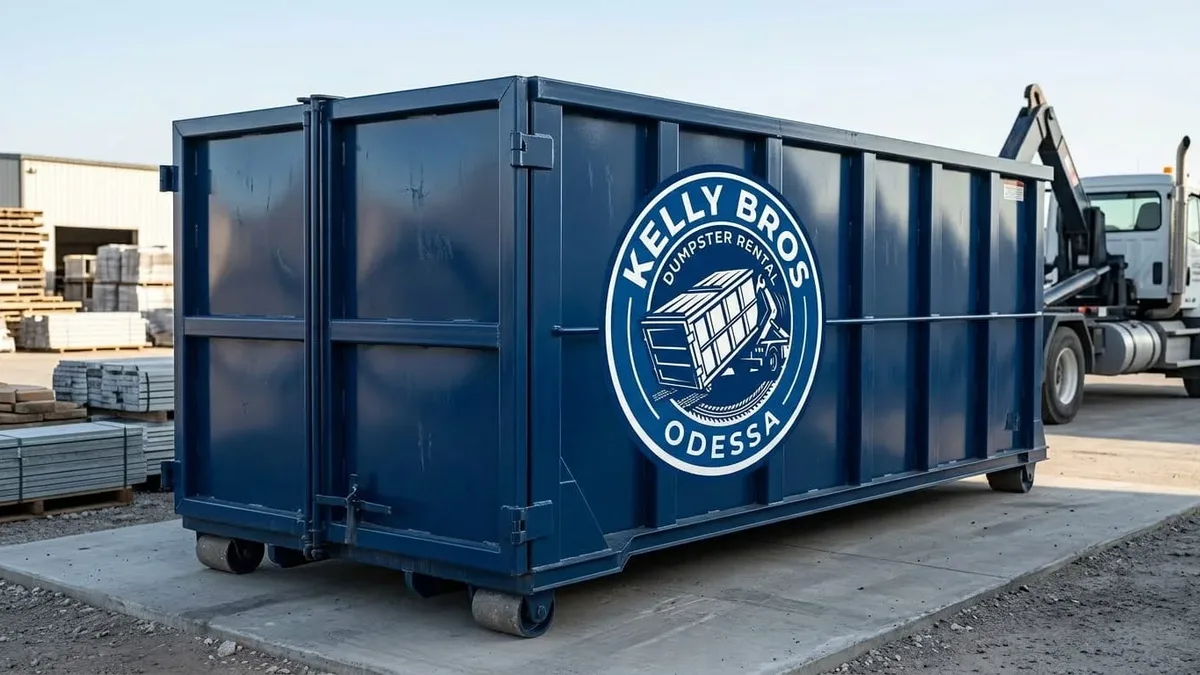
Most construction and demolition projects land on our 20, 30, or 40-yard containers, depending on scope. A single-room remodel or a smaller re-roof might only need a 20-yard, while a whole-structure demolition or a multi-week new-build project usually calls for a 30 or 40-yard so the job isn’t interrupted by mid-project swaps — see our full dumpster sizing guide for dimensions and weight allowances on all five sizes. The weight question deserves its own attention on a construction site specifically: concrete, brick, and masonry debris are dense enough that they often warrant their own dedicated load rather than getting mixed in with lighter framing and drywall waste, since dense material can hit a container’s weight allowance well before it fills the box. Our concrete & heavy debris page covers how we size and quote those loads separately. If your project includes a re-roof specifically, our roofing dumpster rental page is worth a look too, since shingles carry their own weight considerations.
Disposal Rules That Apply on Construction Sites
A few Texas disposal rules come up more often on construction and demolition jobs than on typical household projects, and they’re worth knowing before debris starts piling up. Asbestos is the big one: if a demolition or renovation touches a structure old enough to potentially contain it — older siding, floor tile, insulation, or roofing material are common culprits — it is never permitted in a roll-off dumpster under any circumstances and requires licensed abatement handled entirely separately, regardless of container size or project scope. Tires are a common jobsite item too, whether from equipment or vehicles being cleared off a site, and Texas law bars whole, unprocessed tires from landfill disposal outright — they have to be cut or shredded first through the state’s dedicated tire program, so we don’t accept whole tires in a standard container and can help route them separately if your job includes them. And lead-acid batteries — out of equipment, vehicles, or backup power on a site — carry real legal weight if disposed of improperly: Texas Water Code §7.185 makes it a Class A misdemeanor, on top of being barred from landfill disposal under TCEQ rules. Our full guide to what can and can’t go in a dumpster in Texas covers these and every other restricted item in detail, which is worth a read before a job starts rather than after a container’s already loaded.
The Permian Basin Contractor Angle
Construction activity across Ector County and the wider Permian Basin has stayed steady for a long stretch, tied closely to the region’s oil-and-gas economy and the residential and commercial growth that follows it — new builds, commercial fit-outs, remodels, and infrastructure work all keep contractors busy across Odessa, Midland, and the smaller towns in between. That kind of pace means scheduling flexibility matters as much as container size. If a job needs a container fast, our same-day dumpster rental option is worth asking about when you call. And if you’re coordinating debris removal across multiple sites — a common ask for contractors working jobs spread across Odessa, West Odessa, Andrews, Monahans, or elsewhere in our service area — a single flat-rate phone quote per site keeps things simple without needing to negotiate pricing separately for each location.
Planning Ahead for Weather
West Texas construction schedules also have to account for our windy season, roughly late February through mid-July, with April typically the windiest stretch of the year. High sustained wind, blowing dust, and occasional severe weather — including hail and the rare tornado, like the EF2 that tracked through Gardendale in March 2012 — can affect both jobsite conditions and container scheduling during that window. Building a little flexibility into your container delivery and pickup dates during the spring stretch is worth doing if your project timeline allows for it — a delivery window that slides a day or two rarely matters, but a container stuck in transit during a wind advisory can. Summers here are hot and dry too, which is less of a scheduling issue but worth keeping in mind for crews working full days on an open site.
Get a Flat-Rate Quote for Your Jobsite
Whether you’re running a single remodel or coordinating debris removal across several sites in the Permian Basin, the fastest way to get an accurate quote is to call and describe the job — scope, expected debris mix, and how long you’ll need the container on site. We’ll recommend a size and give you a flat rate, no published price list required. Call Kelly Bros Dumpster Rental at (432) 237-3426, or see our full services lineup for everything we offer contractors and homeowners alike.